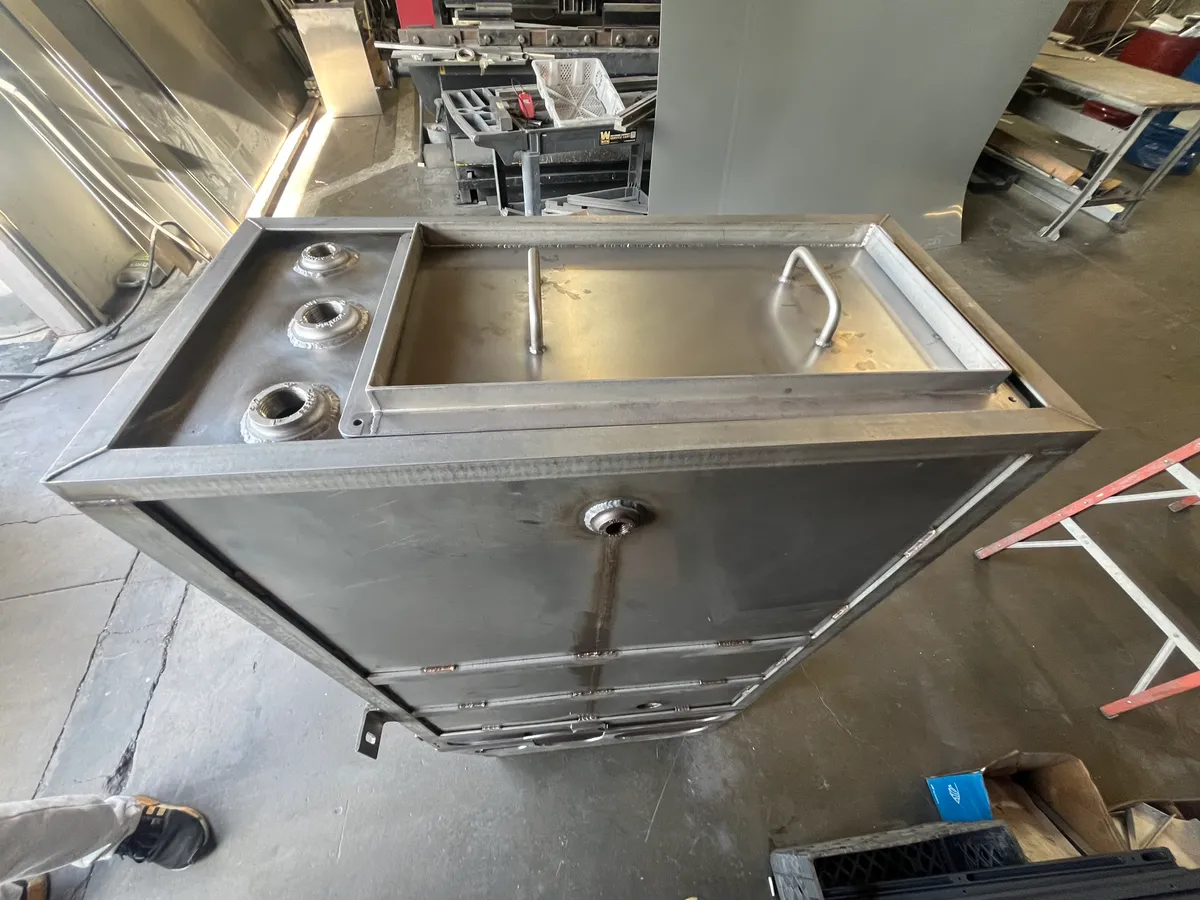
Weld Creations provides stainless steel welding and fabrication for manufacturers across Los Angeles and Southern California. We TIG weld 304, 316 and their low-carbon L grades, controlling distortion, keeping heat tint in check and delivering parts that stay corrosion resistant after welding. That last point is where much stainless work falls short.
Stainless steel is the most common material in our shop, from sanitary equipment for pharmaceutical and food production to enclosures, frames, brackets and machine components.
Welding stainless steel well
Stainless looks forgiving, but three problems separate good stainless welding from bad.
1. Distortion. Stainless expands more than carbon steel when heated and conducts heat more slowly, so heat stays concentrated and parts warp. We control distortion with fixturing, balanced weld sequences, tack spacing and the fine heat control of TIG welding.
2. Loss of corrosion resistance. Stainless resists corrosion because of a thin chromium oxide layer. Welding can damage it in two ways:
- Sensitization. Holding the metal in the 800–1,500°F range can tie up chromium as carbides next to the weld. Low-carbon L grades and controlled heat input prevent it.
- Heat tint. The colored oxide that forms on hot stainless is less corrosion resistant than the base metal. We shield the root side with an argon back purge, then remove heat tint by mechanical cleaning or chemical treatment as the part requires.
3. Contamination. Carbon steel particles embedded in stainless rust, and they make the stainless look like it’s rusting. We use stainless-only brushes, grinding media and tooling, and we keep stainless work separate from carbon steel.
Grades and filler metals
| Base metal | Typical filler | Common use |
|---|---|---|
| 304 / 304L | 308L | General fabrication, frames, enclosures, food equipment |
| 316 / 316L | 316L | Product contact, pharmaceutical, chemical and marine service |
| Stainless to carbon steel | 309L | Brackets and frames joining stainless to structural steel |
We also weld other stainless families, including ferritic grades and precipitation-hardening grades such as 17-4 PH, with procedures matched to the alloy.
Finishing and passivation
The last step decides how the part performs in service. Depending on your specification, we deliver:
- Mechanical finish. Welds blended flush and polished to a specified surface roughness or a matching brushed finish.
- Heat-tint removal. Mechanical or chemical cleaning of weld discoloration.
- Passivation. A chemical treatment that removes free iron and restores the chromium oxide layer, through our partner network.
- Electropolishing. For the smoothest, most cleanable product-contact surfaces, through specialist partners.
What we build in stainless
- Sanitary hoppers, chutes and equipment for pharmaceutical and food and beverage production
- Enclosures, cabinets and tank bodies
- Machine frames, stands, guards and platforms
- Brackets, mounts and machined-and-welded components
- Tube assemblies and custom fittings
- Production runs of repeat stainless parts
Common stainless problems we prevent
| Problem | Cause | How we prevent it |
|---|---|---|
| Warped panels and frames | Concentrated heat and high thermal expansion | Fixturing, tack sequencing, balanced and intermittent welding |
| Rust spots after delivery | Embedded carbon-steel particles | Stainless-only tools and abrasives; passivation |
| Corrosion next to welds | Sensitization or heavy heat tint | L grades, controlled heat input, back purge, heat-tint removal |
| “Sugared” inside of tube | No back purge | Argon back purge on every full-penetration joint |
| Cracking in the weld | Wrong filler or contamination | Matched filler and clean joints |
Stainless to other metals
Stainless is often joined to carbon steel, for example stainless brackets on a painted steel frame. These joints use an over-alloyed filler such as 309L to handle dilution from the carbon steel side. We also join stainless to nickel alloys for mixed-material process equipment.
Duplex and specialty stainless
Duplex and super duplex stainless steels combine high strength with excellent chloride resistance. They’re welded with procedures that balance heat input to preserve the ferrite–austenite microstructure, and with over-alloyed duplex fillers. If your application calls for duplex, or for a specialty grade you haven’t worked with before, send the details and we’ll confirm the approach.
Why Weld Creations
Our gallery is mostly stainless: tablet press installations, hoppers with perforated cones, cleanroom frames, enclosures and production brackets. We’re AWS D17.1 certified, and we bring the same discipline to a stainless frame as to an aerospace part. Cutting, machining and finishing are available through our partner network, so you get the finished part from one supplier. See our capabilities.
Request a stainless steel welding quote
Send the drawing, grade, thickness, quantity, finish and passivation requirements, and your timeline. We reply within one business day.