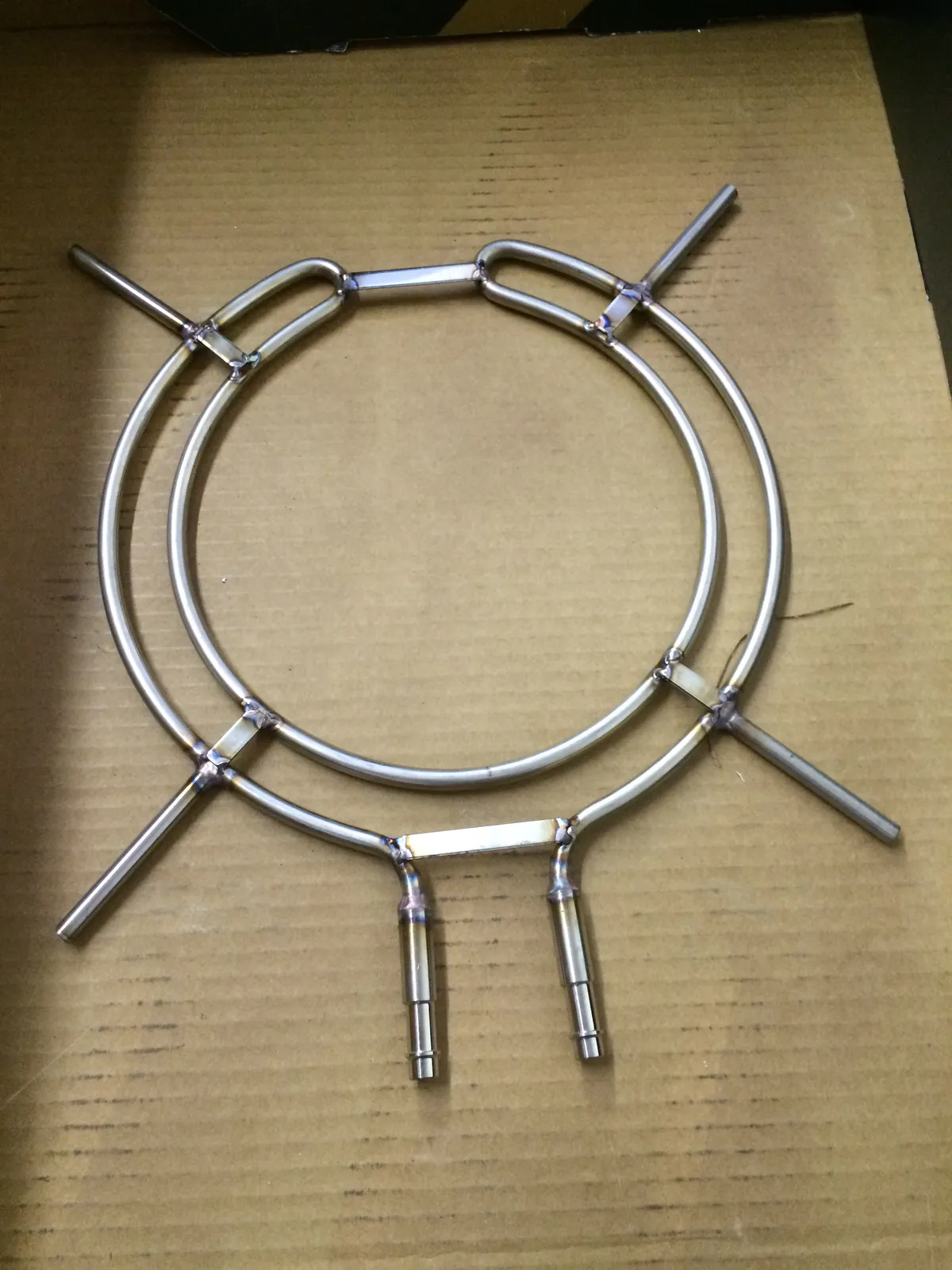
Weld Creations provides custom weldment fabrication for manufacturers across Southern California: machined-and-welded assemblies, tube and frame structures, housings and brackets in stainless steel, aluminum, steel and exotic alloys. We’re AWS D17.1 certified, and the work we’re known for is weldments that still hold their dimensions after the heat goes in.
Have a weldment drawing? Send it with the material, quantity and the features that must not move. Request a quote.
Why a weldment instead of a machined or cast part
A weldment turns simpler pieces into one component. Compared with machining from solid, it wastes far less material and suits large or awkward geometry. Compared with casting, it needs no tooling, so it’s usually the right answer below a few hundred parts and for anything still changing. The trade-off is that welding adds heat, and heat moves metal. Managing that is the whole job.
Holding tolerance on a welded assembly
This is where weldments succeed or fail. Our approach:
1. Review the drawing first. We look for tolerances that welding can’t hold, datums placed on surfaces that will move, joints the torch can’t reach, and material combinations that complicate the weld. Catching those before the quote saves money and rework.
2. Fixture the assembly. Parts are located and clamped so they stay put during welding and cooling. For repeat work the fixture becomes part of the process, so every unit matches.
3. Sequence the welds. Welds are placed and ordered to balance heat around the part rather than pulling it one way. On long seams, that may mean stitching and filling, where the design allows.
4. Control heat input. TIG welding gives the finest control of any manual arc process, which is why we use it on precision assemblies. MIG goes on thicker steel where speed matters more.
5. Machine after welding where it counts. Bores, mounting faces and features that must be accurate relative to each other are best machined once the assembly is welded. We’ll tell you where to leave stock. Machining runs in house or through our partner network.
Designing a weldment that’s cheaper to build
Small drawing decisions multiply across every unit:
- Make parts self-locating. Tabs, slots and notches speed fit-up and improve repeatability far more than tighter part tolerances do.
- Put tight tolerances only where they matter. Let general dimensions take standard fabrication tolerances, and call out the few features that are critical.
- Choose datums that survive welding. Reference features that stay stable, not surfaces that will distort.
- Size welds to the load. Oversized welds add time, heat and distortion without adding function.
- Keep joints accessible. A joint the torch reaches in one orientation welds faster and better.
- Avoid unnecessary material mixes. Dissimilar joints are routine for us, but only specify them when the application needs them.
Send a design before it’s released and we’ll mark up where cost can come out. On production parts, that review usually pays for itself on the first release.
What we build
- Machined-and-welded assemblies. Machined blocks, bosses and bored components welded to plate or frames, like the bracket runs in our gallery.
- Tube and pipe weldments. Frames, rings, manifolds and tube assemblies, back purged where the inside matters.
- Housings and enclosures. Sheet and plate weldments, sealed where they need to be.
- Structural frames and stands. Machine bases, equipment stands and platforms.
- Sanitary weldments. Hoppers, chutes and product-contact assemblies built crevice-free. See sanitary welding.
- Fixtures and tooling. Weld fixtures, check fixtures and handling tooling.
Materials
Stainless steel (304, 316 and the low-carbon L grades), aluminum (5xxx and 6xxx), carbon and chromoly steel, titanium, and nickel alloys including Hastelloy and Inconel. Mixed-material assemblies are welded with fillers chosen for the service, not simply to match one side.
Inspection and documentation
Weldments are inspected against your drawing. Depending on your quality plan we provide dimensional checks after welding, visual weld inspection, material certifications with traceability, first-article reports and photos. Penetrant or radiographic inspection is arranged through our partner network when a specification calls for it.
From prototype to production
Most weldments start as one assembly. If it repeats, we build the fixture, weld and inspect a first article for your approval, and run the order against the approved part. See production welding for how repeat work runs, and subcontract welding if you’re a machine shop sending parts out for welding.
What to send for a quote
The drawing (PDF or STEP), the material, the quantity now and the expected annual volume, the features that must hold tolerance, and any finish, inspection or documentation requirements. We reply within one business day. For a summary to keep on file, see our capabilities.